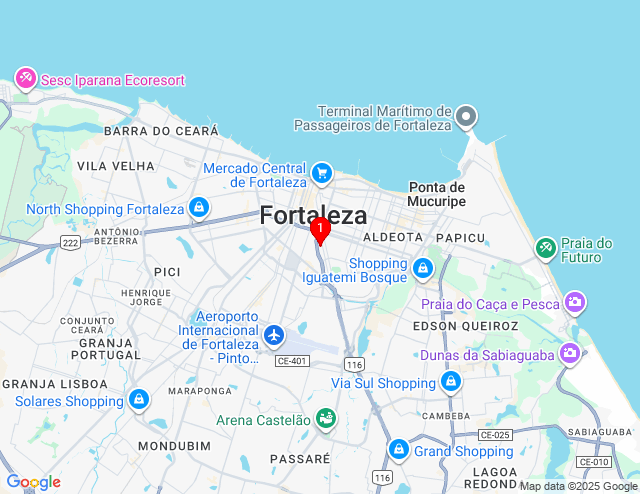
Fortaleza’s story begins along the sunlit coast of Ceará, where European powers first cast their eyes on Brazil’s northeast. In 1649, the Dutch constructed Fort Schoonenborch beside the Pajeú River, hoping to secure their presence in the region.
Although their control was short-lived, the Portuguese soon took over the stronghold, renamed it Fortaleza de Nossa Senhora da Assunção, and laid the foundation for what would become one of Brazil’s most dynamic coastal cities. The fort still stands today, offering travelers a tangible link to the city’s beginnings and a window into its colonial past.
By the 18th and 19th centuries, Fortaleza had transformed into a thriving commercial center. Its strategic position near the Atlantic made it a natural gateway for the export of cotton, leather, and other goods, fueling rapid growth. The period brought elegant buildings, public squares, and the early outlines of the urban landscape that visitors now wander through. Strolling around the Centro district reveals remnants of this era, from neoclassical façades to the impressive Metropolitan Cathedral, whose soaring towers echo the city’s ambitions and resilience.
In the 20th century, Fortaleza evolved yet again, becoming a cultural heart of northeastern Brazil. The city embraced music, poetry, and theater, inspiring generations of artists and giving rise to institutions like the Dragão do Mar Cultural Center, where history, art, and modern life intersect. What makes Fortaleza especially captivating for travelers is this seamless blend: centuries-old roots woven into lively markets, seaside promenades, and a contemporary urban energy.
Today, exploring Fortaleza means experiencing a place shaped by waves—both the ones that crash on its beaches and the ones of history that have shaped its identity. Its past lives in forts, architecture, traditions, and stories, making every walk through its streets not just a trip through the city, but a journey through time.